

Downtime is expensive. Not in a vague, spreadsheet-only kind of way, but in the real-world way business owners feel immediately: missed calls, delayed projects, idle employees, unhappy customers, and a team standing around waiting for desks, computers, and internet access to come back online. A business move can either feel like a controlled handoff or like someone pulled the emergency brake on your week.
That is why smart companies do not treat office moving as a side task. They treat it like an operational event. Whether you run a law office, a retail showroom, a warehouse office, a medical facility, or a growing corporate workspace, the goal is the same: keep the business running while the relocation happens around it.
If you are searching for business moving services Tampa companies can trust, the difference usually comes down to planning, communication, and local know-how. A good move is not just about lifting office furniture. It is about protecting workflow, minimizing downtime, and getting your team back to work fast.
In a market as active as Tampa, that also means understanding building access, parking rules, elevator schedules, and traffic patterns across the tampa bay area. Below is a practical before-during-after framework to help you handle a business move without losing a day of productivity.
Before the move: start planning at least 4 weeks out
The biggest mistake in commercial moving is waiting too long to organize the details. Business owners often think, “We’re just moving an office,” until they realize that one office contains computers, phones, files, office furniture, cables, breakroom supplies, printers, shelving, and a hundred small operational dependencies nobody noticed until they had to unplug them.
A successful office moving plan starts about four weeks before move day. That gives your company enough time to build a timeline, assign responsibilities, and avoid the chaos that turns a simple relocation into a stressful scramble. For small businesses and large corporations alike, early organization protects efficiency.
Week 4: build the move plan and assign internal roles
Start by naming one point person inside your business. This does not have to be the owner, but it should be someone with authority, attention to detail, and enough visibility to coordinate departments. That person becomes the bridge between your staff and the moving company.
At this stage, create a written plan for the moving process. Include your target date, access times for both locations, parking instructions, building contacts, and a room-by-room inventory. If you are working with a commercial moving company, this is also the right time to request a free estimate and walk through any specialized services you may need.
Week 3: inventory furniture, equipment, and technology
This is where office moving becomes more technical. Count every workstation, conference table, filing cabinet, reception desk, shelf unit, and piece of office furniture. Then go beyond furniture and document your equipment: computers, monitors, phones, copiers, routers, servers, and any electronics tied to daily operations.
Professional office movers know that the move is rarely about volume alone. It is about sequence. If your computers arrive before desks are placed, or your office furniture lands before the cabling team is ready, your new location can still feel unusable. An experienced team helps you think in order, not just in boxes.
Week 2: coordinate building logistics in Tampa
This part matters more in tampa fl than many businesses expect. If your office is in a high-rise or mixed-use commercial property, ask building management about elevator reservations right away. Many downtown office buildings have narrow move windows, freight elevator rules, insurance requirements, and loading dock schedules that can make or break your timeline.
Parking logistics also deserve attention. In parts of tampa bay, especially downtown or dense commercial corridors, truck access is not always simple. Some buildings require permits, designated loading areas, or after-hours arrival. Commercial movers in tampa who know the area can help you avoid the headache of a truck circling the block while your employees watch the clock.
Week 1: prepare employees for a fast restart
Your employees should know exactly what happens before, during, and after the business move. Give them packing deadlines, label instructions, and a clear explanation of what they are responsible for. For example, one department may be responsible for backing up computers, while another confirms file cabinets are ready and personal items are packed.
This is also the week to confirm internet installation, phone systems, access cards, and workstation assignments at the new location. The best commercial moving services support a seamless transition, but your internal systems also need to be ready. A move is like a relay race: if one handoff fails, the whole pace drops.
During the move: protect time, access, and workflow
Move day should not feel improvised. By the time the truck arrives, every major decision should already be made. The role of the movers is to execute the plan efficiently, protect your furniture and equipment, and keep the relocation on schedule.
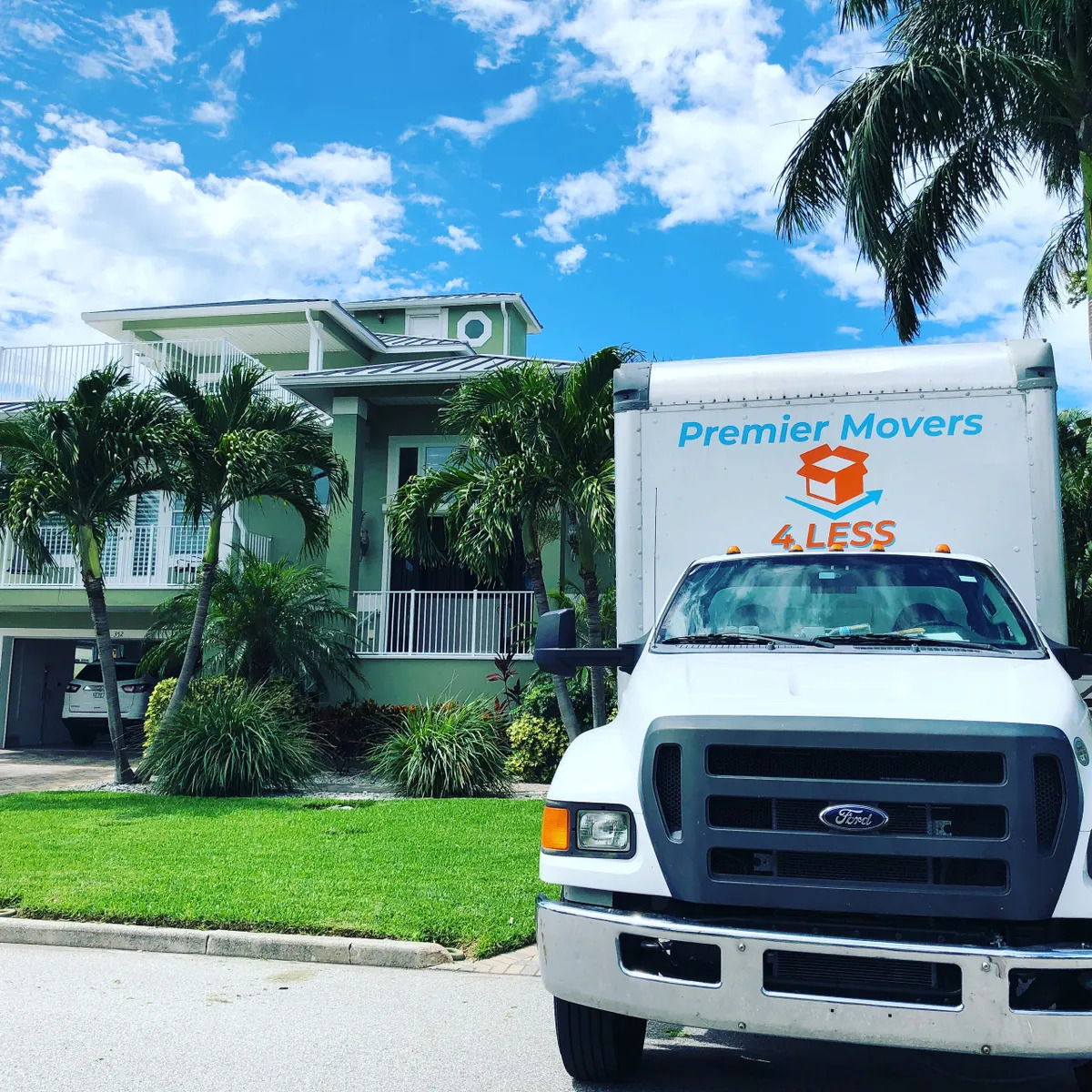
For many companies, the smartest approach is to schedule after-hours or weekend commercial moving. That allows your employees to finish work in one office on Friday and return Monday ready to operate in the new space. Premier Movers 4 Less offers flexible scheduling, which can be a major advantage for businesses trying to avoid daytime disruption.
Schedule around Tampa traffic, not against it
In Tampa, traffic planning is not a minor detail. If your move requires crossing town, avoid rush-hour backups on I-275 whenever possible. A truck stuck in traffic with your office furniture, computers, and files is not just inconvenient. It is active downtime.
Experienced commercial movers in tampa understand that timing affects labor, access, and productivity. Leaving an hour too late can create a domino effect: delayed loading, missed elevator windows, slower unloading, and employees waiting longer than planned to resume work. A professional team plans the route and timing like part of the job, because it is.
Label by destination, not just by department
A lot of office movers will tell you to label boxes. That is true, but not specific enough. Label every item by exact destination in the new office: reception, conference room A, marketing bullpen, executive office, supply closet, breakroom. The more precise your labeling, the faster the setup.
This matters for office moving because speed comes from fewer decisions on move day. If movers have to stop and ask where each piece of furniture goes, the process slows down. If everything is clearly labeled, the team can move efficiently and keep the whole office relocation smooth.
Keep critical operations separate from general inventory
Not everything should go on the truck at the same time. Identify a “day one” set of essentials: computers, phones, printers, internet equipment, client files, key electronics, and anything needed to reopen immediately. These items should be loaded and unloaded with restart priority in mind.
This is especially important for a medical facility, customer-facing office, or any business handling confidential information. Tampa commercial movers with real commercial moving expertise understand that some items are operationally critical, not just physically fragile. That distinction is what separates basic moving services from true business relocation support.
After the move: set up the new space for immediate use
A business move is not finished when the truck is empty. It is finished when your employees can sit down, log in, answer customers, and do their job without hunting for chargers, extension cords, or missing desk hardware.
The after phase is where a seamless transition either happens or falls apart. This is why office movers should do more than transport furniture from one location to another. The best commercial moving services help position office furniture, place equipment correctly, and support a fast operational reset.
Set up workstations first, storage second
When the team arrives at the new location, focus first on the spaces that generate immediate productivity. That usually means reception, primary workstations, conference rooms, and any customer-facing area. Storage rooms, archived files, and less-used furniture can come after.
This order matters. If your employees can work by 9 a.m., the move was successful even if the supply closet is still being organized at noon. A strong commercial moving company understands that the goal is not perfection in the first hour. It is function.
Test systems before declaring the move complete
Before you send the all-clear to staff or clients, test everything. Turn on computers. Check internet speed. Confirm phones ring. Make sure printers connect. Walk the office. Open the file cabinets. Verify electronics, equipment, and furniture were placed where planned.
This final walkthrough is one of the simplest ways to reduce post-move stress. It also gives your team peace of mind. Instead of discovering problems one by one throughout the day, you catch them early and move forward with confidence.
Use storage strategically if your timeline is tight
Not every commercial relocation happens in one clean motion. Sometimes the new office is smaller. Sometimes furniture delivery is delayed. Sometimes a phased renovation means not everything can move in at once. In those cases, secure storage can protect your timeline.
Storage gives your business breathing room. Rather than cluttering the new office with furniture or equipment you do not need immediately, you can stage the move in phases. That is especially helpful for commercial clients managing renovations, expansions, or long distance changes within florida. A moving company that offers storage options can make the entire process far more flexible.
Why local experience matters for commercial moving in Tampa
There is a reason so many businesses prefer commercial movers in tampa instead of a generic out-of-town crew. Local experience changes the quality of the move. A moving company in tampa that understands the roads, buildings, timing, and pace of the local industry can solve problems before they become delays.
That local edge matters whether you are relocating a small office across town, coordinating a corporate move in tampa bay, or handling commercial moving for a growing team in a busy building. The best movers in tampa know how to protect furniture, manage equipment, communicate clearly, and adapt when access conditions change.
Premier Movers 4 Less brings that practical mindset to business relocation. Their team is known for being on time, communicating at each step, and handling belongings with care. For business owners, that means less guesswork and a more stress free move. It also means having commercial movers who understand that your company cannot afford wasted motion.
A better business move starts with the right partner
Whether you are relocating a professional office, coordinating office furniture installation, or planning a larger commercial moving project in the tampa bay area, productivity has to stay at the center of the plan. The right strategy is simple: prepare early, move at the right time, and set up the new office for immediate use.
That is how businesses avoid downtime. Not with luck, and not with last-minute hustle, but with a team that understands commercial moving from both the logistics side and the business side.
If you are planning a relocation and want a moving company in tampa that values reliability, communication, and careful execution, explore Premier Movers 4 Less’ Business Moving Services and request your free estimate today.